
PROP HOURS BLOG
Cost Segregation for Rental Property, Explained
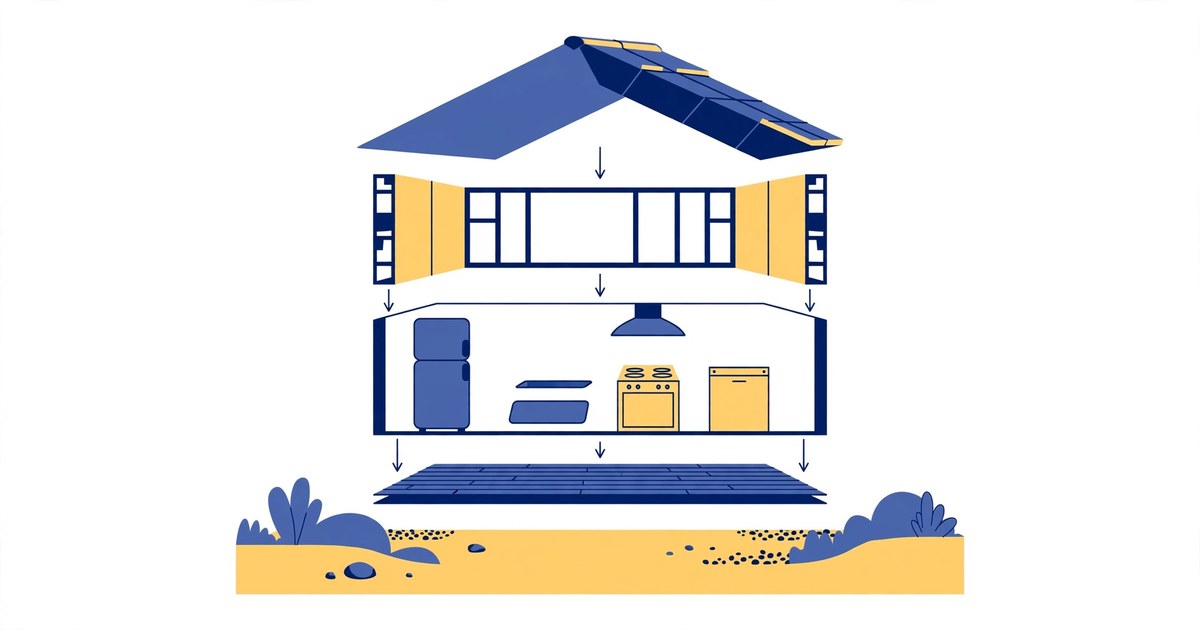
Depreciation is slow by default: 27.5 years for a residential rental, a little back each year. Cost segregation asks a simple question — what if the building is not one asset but hundreds? — and the answer can move six figures of deductions into year one. Here is how the study works, when it pays for itself, and the limits that still decide whether you can use the losses.
Depreciation, the default way
Buy a residential rental and the tax code hands you a schedule: the building (excluding land) depreciates straight-line over 27.5 years; nonresidential property gets 39 years. On a $275,000 building allocation, that is $10,000 a year — steady, predictable, and slow. Everything the building contains is lumped together: the roof, the carpet, the dishwasher, the parking lot all share one clock.
But that lumping is a simplification, not a law of physics. A dishwasher does not last 27.5 years. Neither does carpet, landscaping, or a parking lot surface. Cost segregation is the engineering exercise of breaking the building back into its real components and assigning each its proper recovery period.
What a cost segregation study does
A study — typically performed by engineers or specialized firms — inspects the property (and its construction records) and reclassifies components into shorter MACRS buckets:
- 5-year property: appliances, carpeting, decorative lighting and fixtures, and certain specialty electrical and plumbing serving equipment rather than the building.
- 7-year property: office furniture, fixtures, and equipment not elsewhere classified.
- 15-year property: land improvements — parking lots, landscaping, fences, sidewalks, and exterior lighting.
What remains — the structure itself — stays at 27.5 or 39 years. Studies commonly reclassify 15–30% of a residential property's depreciable basis into the shorter buckets, though the share varies widely with property type and condition.
Bonus depreciation supercharges it
The reclassified 5, 7, and 15-year property may qualify for bonus depreciation: an additional first-year deduction on top of regular MACRS. That is what turns a study into a year-one event — instead of spreading the short-life deductions over 5 to 15 years, a large share can land in the placed-in-service year.
One caution: the bonus percentage has been phasing down under the TCJA schedule. Do not model with a stale percentage from a years-old article — confirm the current-year rate with your CPA before you size the benefit, because it changes the entire calculation.
When a study pays for itself
A quality engineering-based study typically costs a few thousand dollars, scaling with property size and complexity. The math favors newly purchased or newly renovated rentals, where the depreciable basis is fresh and the reclassification yields the largest first-year deductions. Rough rule of thumb: multiply the expected reclassified basis by your marginal tax rate — if that number dwarfs the study fee several times over, the study is worth pricing.
Bought years ago? You are not necessarily too late. Taxpayers can generally perform a study on an older property and claim the "catch-up" depreciation they missed in the current year. Discuss the mechanics — and the paperwork — with your CPA; the lookback has its own rules.
The part people skip: the loss still has to be usable
A cost segregation study creates paper losses. It does not, by itself, make those losses deductible against your other income. The passive activity rules still decide: if the property is a per se passive rental activity and you are not a real estate professional who materially participates, the beautiful first-year deduction may simply become a suspended passive loss, carried forward until you have passive income or sell.
This is why cost segregation is almost always paired with a participation strategy — material participation for short-term rentals under the 7-day rule, or REPS plus material participation for long-term rentals. The study and the hour log are two halves of one plan; investors who buy only the first half are often disappointed.
And remember the exit: depreciation recapture rules tax some of the benefit back when you sell, at rates that can exceed capital gains rates. Model the full hold period — year-one savings minus eventual recapture — not just the exciting first year.
Real-world example
Marcus buys a duplex for $420,000; after the land allocation, the depreciable building basis is $320,000. Default depreciation: about $11,600 a year for 27.5 years.
He commissions a $4,500 engineering study, which reclassifies 25% — $80,000 — into 5, 7, and 15-year property (appliances, flooring, fixtures, the parking pad, landscaping). With bonus depreciation available on the short-life property, the great majority of that $80,000 is deductible in year one instead of trickling out over decades. At his marginal rate, the year-one tax benefit is a multiple of the study fee.
But Marcus also runs the duplex's carriage-house unit as a short-term rental, logs his hours, and meets the 100-hour test — so the losses are non-passive and usable. Without that second half, the $80,000 would have joined a pile of suspended passive losses. The study made the loss; the log made it deductible.
Try the numbers yourself
Before you pay for a study, sanity-check the benefit. Our free cost segregation calculator lets you plug in a purchase price and see how reclassification plus bonus depreciation changes the first-year picture — a useful starting point for the CPA conversation.
How much does a cost segregation study cost?
Typically a few thousand dollars, depending on property size, type, and complexity. Engineering-based studies — with a site visit and a detailed report — are the standard that survives scrutiny; back-of-the-envelope estimates are not.
Can I do a study on a property I bought years ago?
Often yes. Taxpayers can generally perform a study on an older property and claim the depreciation they missed in the current year as a catch-up adjustment. The mechanics have specific rules, so have your CPA handle the filing.
Does cost segregation increase audit risk?
A proper engineering-based study with documentation is standard, mainstream tax practice. What draws attention is aggressive or unsupported reclassification — components assigned to short lives without a defensible basis.
What happens to the benefit when I sell?
Depreciation recapture rules apply: part of the gain attributable to depreciation can be taxed at higher rates than long-term capital gains. Always model the full hold period — year-one savings net of eventual recapture — before deciding.
Do I need a study to claim bonus depreciation?
Bonus depreciation applies to property with shorter recovery periods. Without a study, nearly everything sits in the 27.5 or 39-year buckets, which do not generate the same first-year benefit. The study is what creates the short-life property to begin with.
Will the bigger loss automatically cut my taxes?
Only if the loss is usable. Passive activity limits, at-risk rules, and the excess business loss limitation still apply. Pair the study with a participation strategy — material participation, REPS, or the STR route — and confirm the analysis with your CPA.
Related reading
Run your own numbers with the cost segregation calculator, then read how to make the losses usable: our short-term rental tax loophole guide and the 100-hour material participation test most STR owners rely on.
This article explains cost segregation concepts in general terms and is not tax advice. Results depend on your property, the study, and current law; review IRS Publication 925 and consult a qualified tax professional. PropHours records the work you log — it does not determine tax eligibility.